

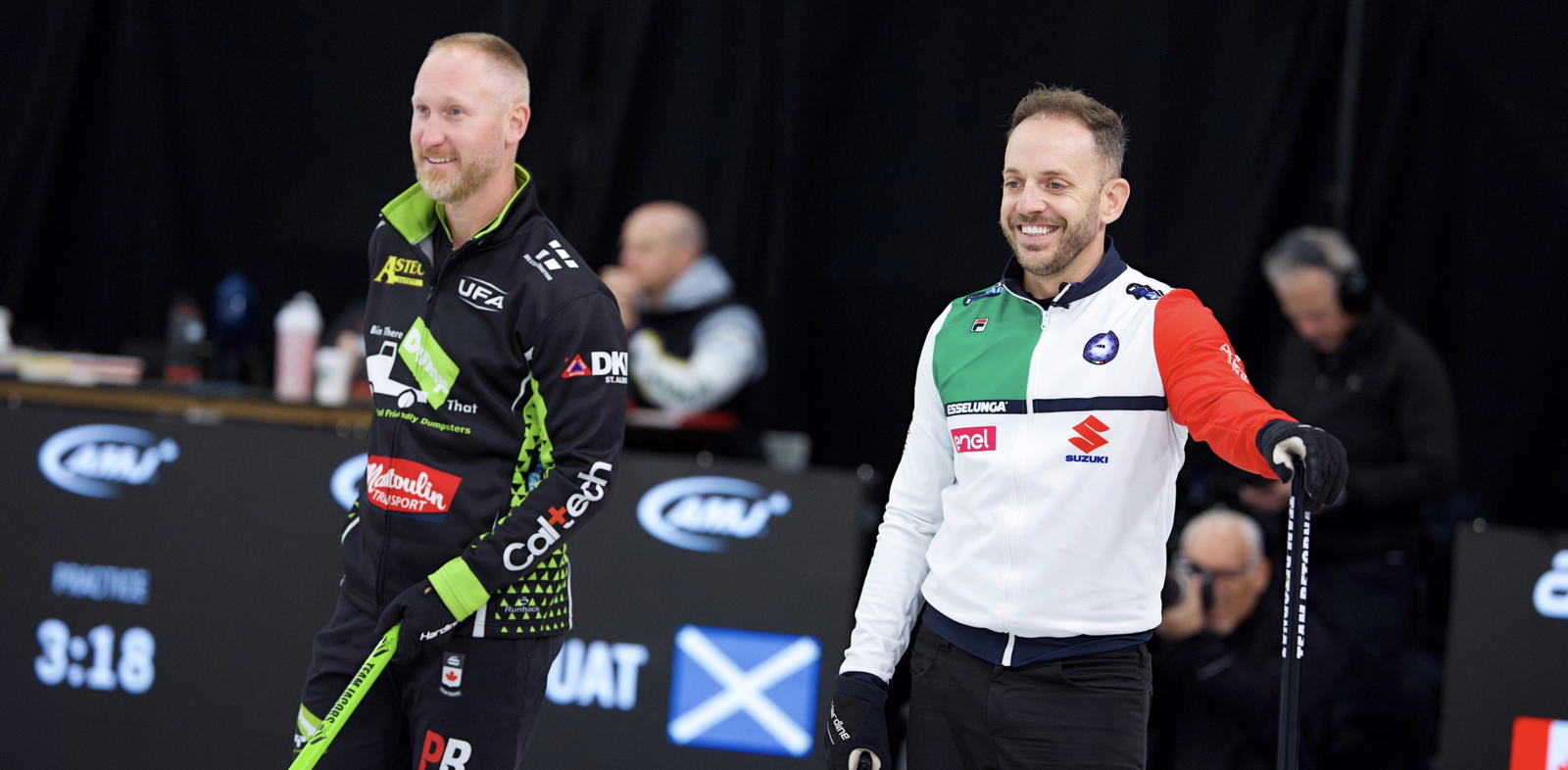



Curling fans have faced a dizzying array of rule changes in recent years – and the new 2025-26 season is no exception.
The second Grand Slam tourney of the season, like the first, is throwing another curveball.
A new blank end rule is in effect at the Tour Challenge in Nisku, Alta. Team are allowed only one blank end per game.
If a team blanks a second time at any point of the game, they will lose last rock advantage for the following end.
The rule is meant – in the words of The Curling Group – “to discourage teams from blanking multiple ends, particularly at the start of the game, and generate offence. Teams that wish to blank will now have to be selective.”
Hoo boy.
Will that mean less peels are thrown? If so, how will the bananas cope?
There are other tweaks as well, some of which we saw at the first Slam at London, Ont. There are no extra ends (in favour of a shootout), and thinking time is down to 30 minutes per game… it was 31 minutes in London and 33 minutes last season.
The new points qualification system is still in effect: teams earn three points for a pool win (in eight ends or less), two points for a shootout win, and one point for a shootout loss.
The one-blank rule, however, already has jaws wagging. For every fan that loves the idea, there’s at least two that are dead-set against it.
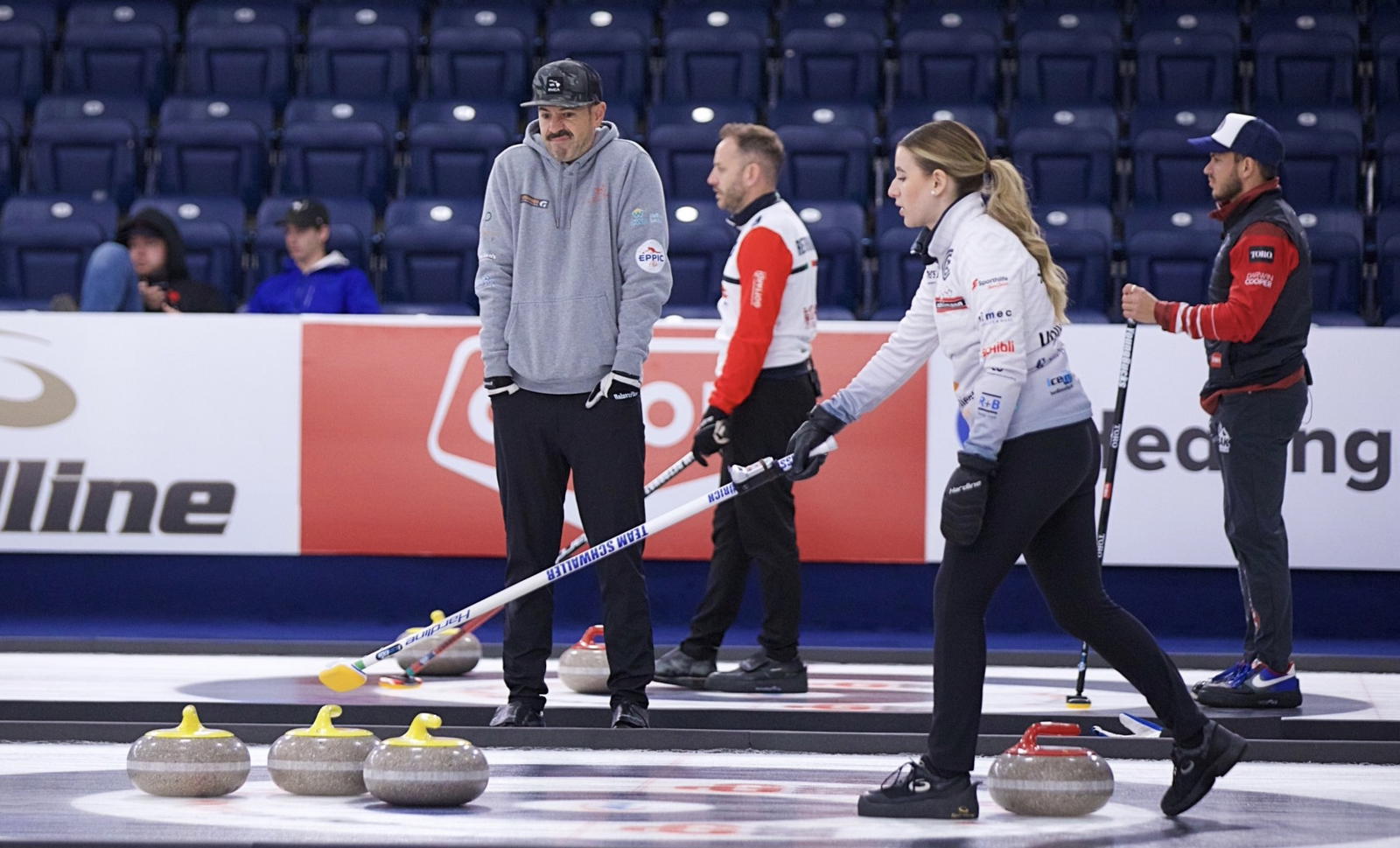 “Too late to blank?” • Anil Mungal-The Curling Group
“It’s about time,” posted one fan online. “I don’t mind a couple blanks but I have seen Jacobs blank four ends in a row, makes for a boring game.”
“Blanking an end is a skill, it’s part of the game,” posted another fan. “It’s also a show of skill to force (an opponent) to one point and avoid the blank. Wish that people would enjoy the skills of the players versus changing the rules for the sake of viewers being unable to appreciate the skill sets!”
Many fans are also expressing frustration with the sport’s apparently obsession with constantly changing rules.
“Hi everyone, curling has been trying hard to stop blank ends for about 40 years,” bellowed world champion skip Hammy McMillan Sr. all the way from Scotland.
“We now have fantastic ice with the ice technicians understanding the rocks… we have a 5-rock rule and no tick and all it takes is two or three good shots and it’s all clear. The ruling body and other investors need to stop changing the rules and look at other incentives.
“STOP CHANGING THE GAME AND LET THE PLAYERS EXCITE THE FANS.”
One thing fans should remember is that this is a one-event experiment; something the Slam series is quite famous for.
If you can’t try out a new rule in competition, how will the sport ever be able to make changes that are deemed necessary?
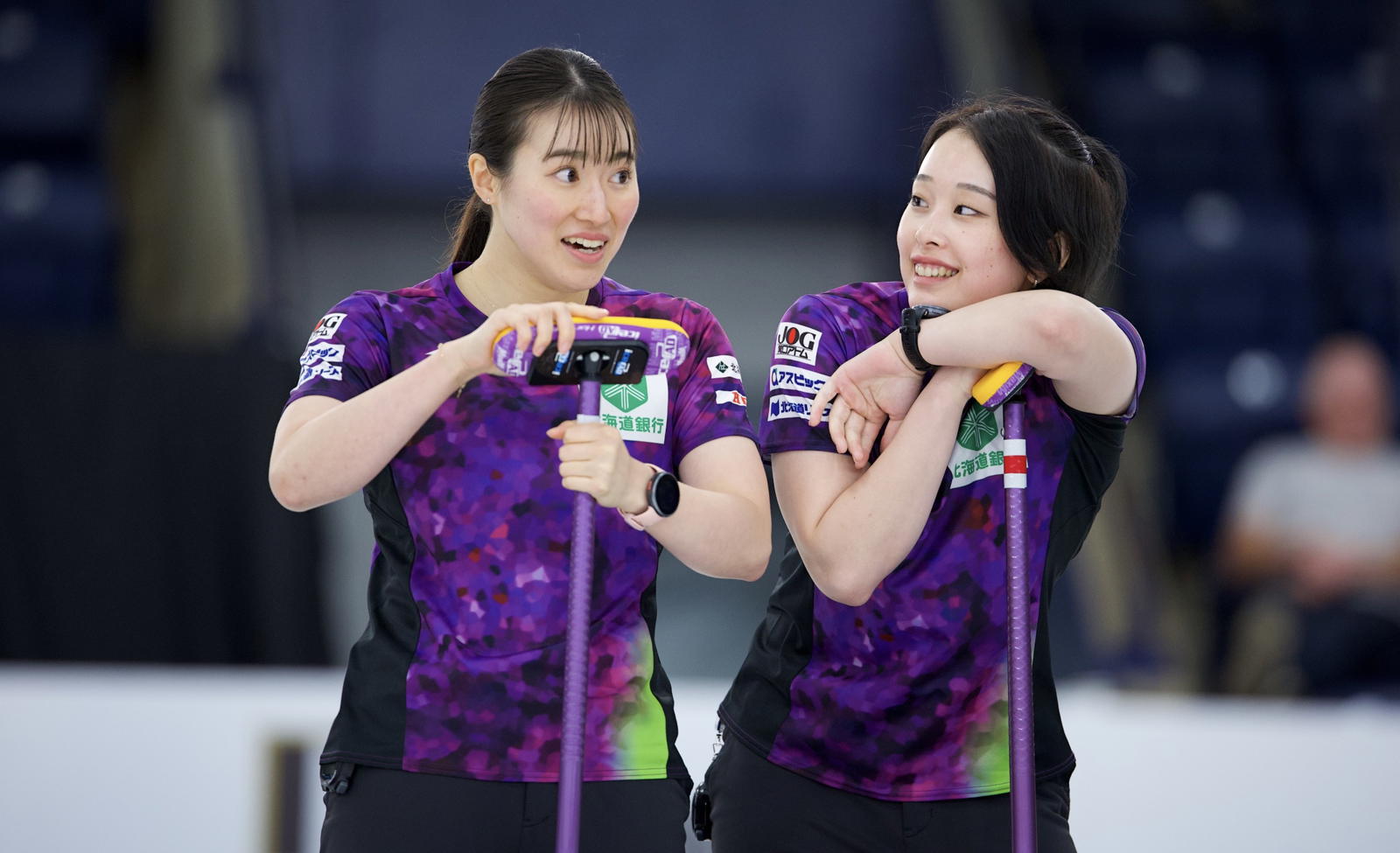 Team Tabata • Anil Mungal-The Curling Group
“I think we need to make sure we are telling fans it is a made for TV rule, like the no tick,” offered another fan. “It is not something that should be introduced at the club level. New curlers, in social leagues, should not have rocks removed because they accidentally ticked the centre line guard.
“Elite curlers have the ability to do triples and quads to remove all rocks from play, so one blank end makes for better television.”
The Slams recently trialled a different blank end rule, back at Guelph, Ont. in January. Teams could only blank one end in a row; a repeat pair of zeroes on the scoreboard handed last rock advantage over to the other team.
“Retaining hammer with a blank end is an integral part of curling strategy and not simply an outdated rule from a bygone era,” wrote Palmer. “I’ve long asserted if you eliminate the option to blank an end to retain hammer, ‘chess on ice’ becomes checkers. Deciding how to balance aggressive and conservative tactics based on score and ends remaining is a critical component which makes (traditional four-player) curling unique and interesting.
“The notion that trading hammers each end could generate more interest in the sport is misguided,” Palmer continued. “The mixed doubles discipline took this approach and though its speed of play and teams of X and Y chromosomes has garnered appeal, it hasn’t been difficult to buy a ticket at the gate. The only struggle is finding it on a streaming service because broadcasters don’t see enough demand for it to appear on television.
“Despite my perspective, I applaud the GSOC for trying something new.”
They’re trying something new once again.
Play is now underway in Nisku with all games – except for those covered by Canadian broadcaster Sportsnet, which begins coverage on Thursday – available on The Curling Group’s new all-curling streaming service, Rock Channel.